Rooftop solar
Your roof tells us how many panels will fit. Your bill and daytime routine tell us how much of their power you are likely to use. We check both before proposing a system.
 Contact
From the fridge that runs all day to the air conditioner on a hot afternoon, your home can use power straight from your roof. Start with your monthly electricity bill to see what that could save you.
Estimate my home savings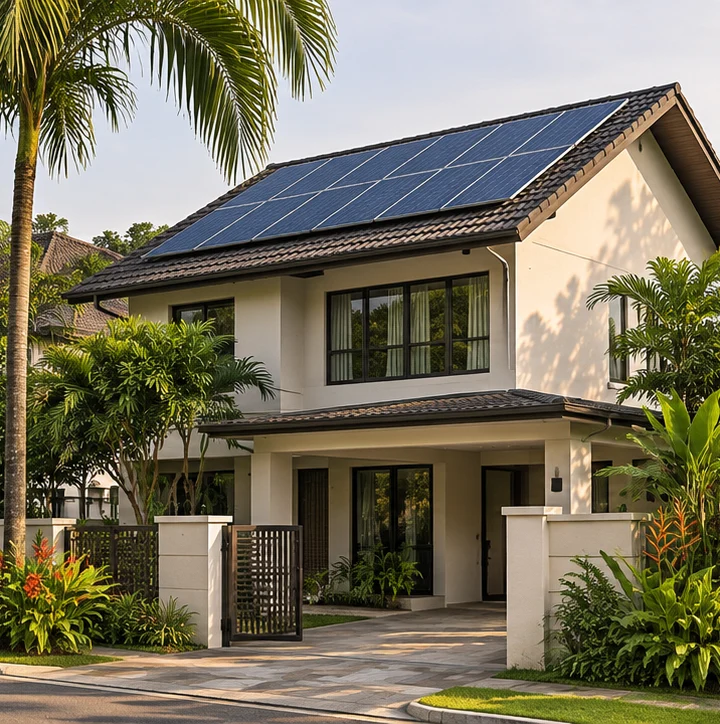
Your roof tells us how many panels will fit. Your bill and daytime routine tell us how much of their power you are likely to use. We check both before proposing a system.
A home that uses most of its electricity after sunset may have surplus solar during the day. We compare solar alone with adding storage using your actual pattern.
If backup matters, choose the appliances you need first. See how we assess battery backup.
Use your monthly kWh or bill amount. TNB Domestic General, Peninsular Malaysia.
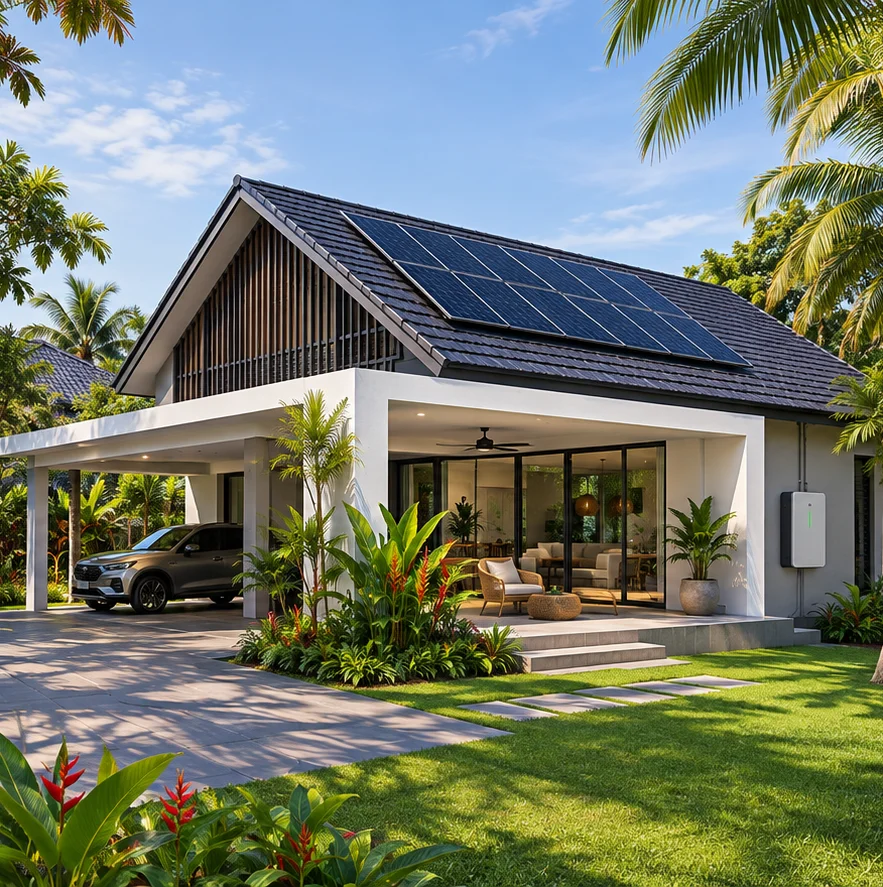

Leaks can happen if tiles are damaged or roof fixings are poorly sealed. If you already see damp patches after rain, have the roof checked before panels go on. Ask how the mounts will be fitted to your roof type and what the installation warranty covers if a leak appears.
Yes. Panels can produce electricity from daylight that passes through clouds. Output falls under heavy cloud or rain. If your panels cannot cover what your home is using, the grid supplies the balance while it is available, or a battery can help if one is installed and charged.
Your fridge, router and other appliances that are switched on can still use solar power. Any surplus can charge a compatible battery. Depending on your connection and export arrangements, remaining generation may be sent to the grid or limited by the inverter.
After sunset, your home draws from the grid unless you have stored energy available. A battery can store surplus daytime solar for evening use. You can add one later, but check inverter compatibility before installation if you want to keep that option open.
A standard grid-connected solar system shuts down during a power cut, even on a sunny day. To keep essentials such as lights, Wi-Fi or the fridge running, you need a system designed for backup. Check which circuits will have backup power before installation.
Rain can wash away loose dust, but bird droppings and debris can remain. Check your monitoring app for alerts or a persistent drop in generation across similarly sunny days. Ask your installer to inspect the system and arrange cleaning if needed. Leave rooftop work to trained personnel.